
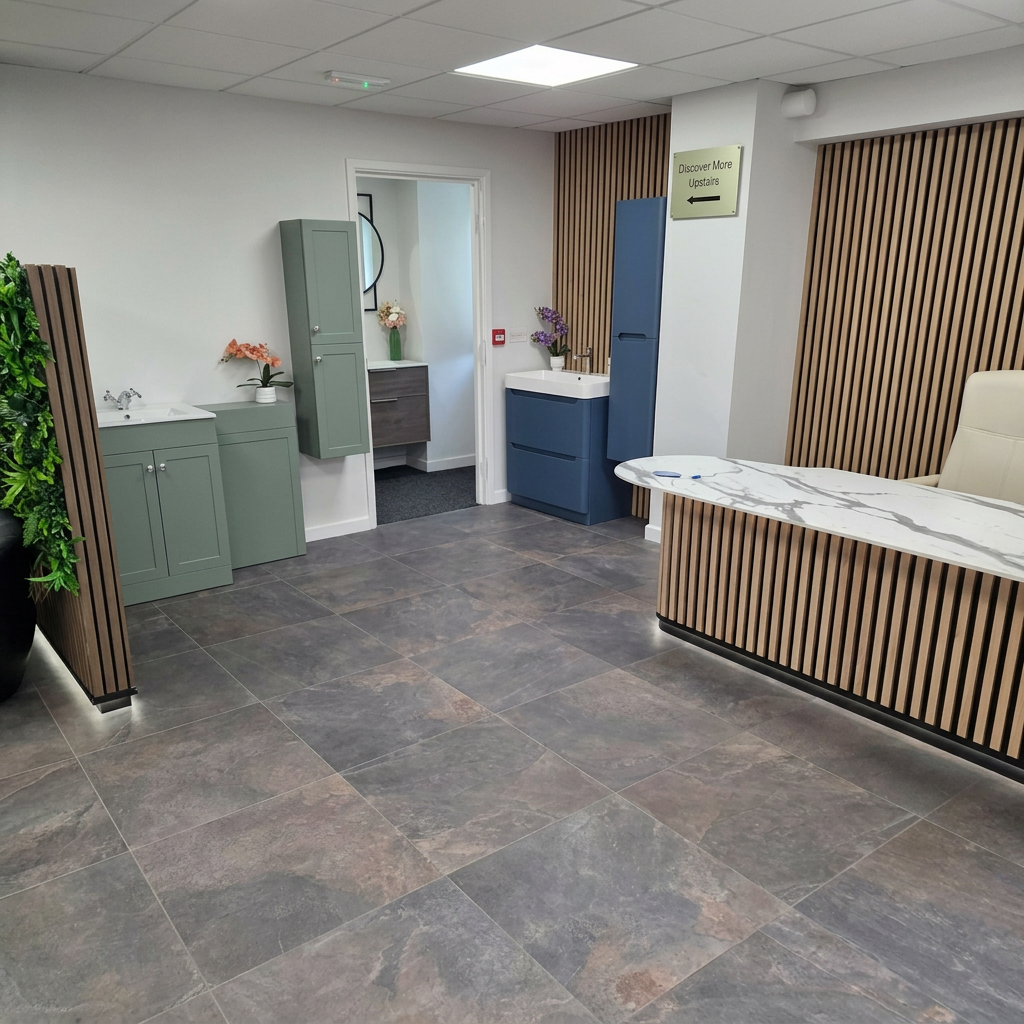
Blue Sky Luxury Bathrooms · Tamworth
Underfloor HeatingInstallation in TamworthWarmth From the Ground Up
Step onto warm tiles every morning — professionally installed underfloor heating that eliminates cold floors and frees your walls from bulky radiators.
★ Electric & water-fed systems · 20+ years' experience · Full warranty · Free consultations
20+ Years' Experience
Industry expertise
1000+ Projects
Successfully completed
Full Warranty
On every installation
No Subcontractors
One dedicated team
Free Consultations
No obligation quotes
Why Underfloor Heating Transforms Your Bathroom Experience
Cold bathroom tiles are one of the most common complaints homeowners have — especially during winter months. Underfloor heating eliminates this entirely, turning your floor into a gentle, even heat source that warms the room from below without the hot spots and cold drafts associated with radiators.
Beyond comfort, underfloor heating frees wall space previously occupied by radiators and towel rails, giving you more design flexibility and a cleaner aesthetic. In bathrooms, it also helps reduce condensation and moisture, keeping surfaces drier and inhibiting mould growth.
At Blue Sky Luxury Bathrooms, we install both electric mat systems (ideal for individual rooms and retrofits) and water-fed systems (connected to your central heating for whole-house efficiency). Each system is specified based on your room size, floor construction, and heating requirements.
We install underfloor heating across Tamworth, Lichfield, Sutton Coldfield, Burton-on-Trent, Nuneaton, Birmingham, and the wider West Midlands — typically as part of a bathroom or kitchen renovation.
Real Client Homes
Recent Underfloor Heating Tamworth Projects
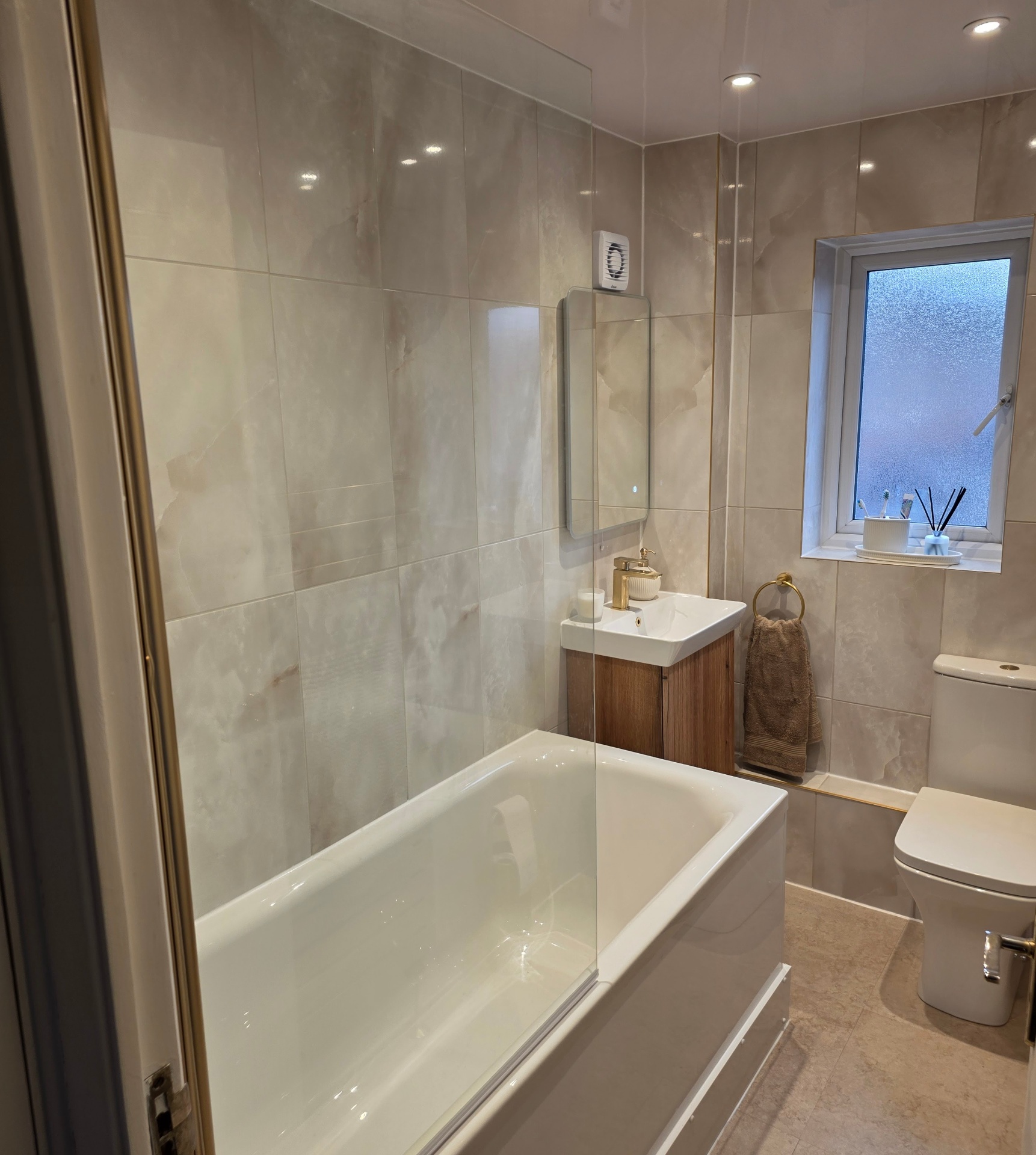
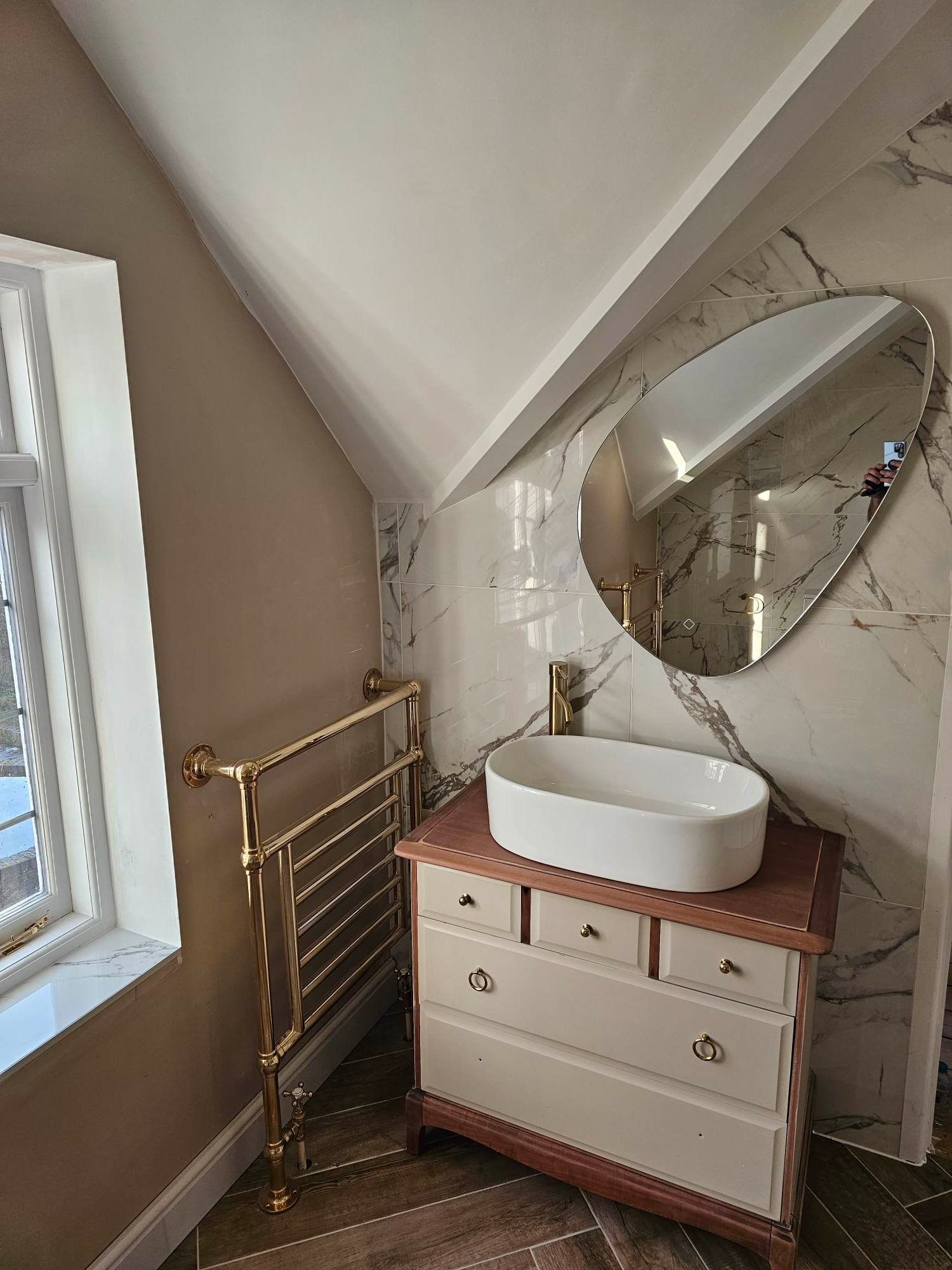
Every photo below was taken in a genuine client's home after completion — supplied and installed by our in-house Blue Sky team.
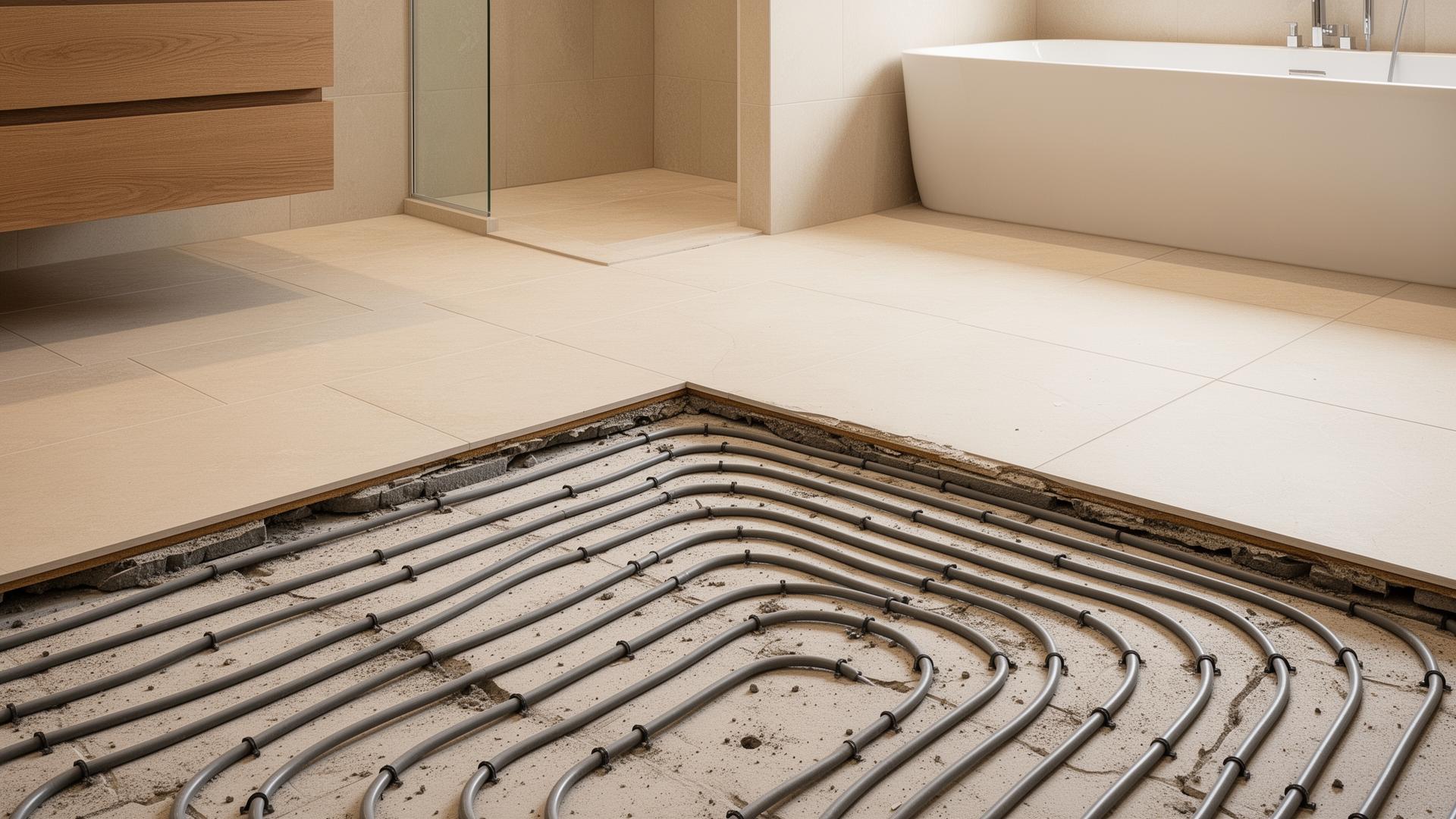
What Happens When Underfloor Heating Is Installed Incorrectly
Incorrectly installed underfloor heating creates uneven hot spots that damage tiles and adhesive, or cold patches where heating elements are spaced too far apart. Both issues are invisible once tiled over and extremely expensive to rectify — requiring complete floor removal.
Missing or inadequate insulation beneath heating elements means heat radiates downward into the subfloor instead of upward into the room. This wastes energy, increases running costs, and produces disappointing warmth levels.
Electrical heating mats damaged during tiling — cut cables, pierced insulation — create dead zones or complete system failure. Locating and repairing a severed cable beneath tiles requires specialist fault-finding equipment and tile removal.
Thermostat and sensor placement errors result in inaccurate temperature readings, causing the system to overheat or underperform. Floor sensors must be positioned correctly between heating elements, not on top of them, and connected to compatible thermostats.
Our Process
How We Deliver Results,
Step by Step
Assessment & Specification
We assess your floor construction, calculate heat output requirements, and recommend the right system type — electric or water-fed.
Insulation Installation
Thermal insulation boards are laid to direct heat upward into the room, maximising efficiency and reducing running costs.
Heating Element Installation
Electric mats or water pipes are laid according to manufacturer spacing guidelines, avoiding furniture positions and fixture points.
Electrical Connection
The system is connected to a dedicated circuit with a programmable or smart thermostat and floor temperature sensor.
Testing & Commissioning
The system is electrically tested and resistance-checked before tiling. After tiling, it is commissioned and temperature-calibrated.
Why It Matters
What You Gain When You
Work With Us
Warm Floors Every Morning
Programmable thermostats heat your floor before you wake up — step onto warm tiles instead of cold ceramic.
Even, Comfortable Heat
Heat rises evenly across the entire floor surface, eliminating the cold zones and hot spots created by radiators.
Free Wall Space
Remove radiators and reclaim wall space for storage, design features, or simply a cleaner look.
Reduced Condensation
Gentle floor warmth keeps bathroom surfaces drier, reducing condensation on mirrors and windows and inhibiting mould growth.
Energy Efficient
Underfloor heating operates at lower temperatures than radiators while achieving the same comfort level — reducing energy consumption.
Compatible With All Floor Tiles
Porcelain, ceramic, natural stone, and LVT all work excellently with underfloor heating. We advise on compatibility during specification.
Underfloor Heating Systems: Types, Specifications & Compatibility
Electric underfloor heating uses thin heating mats or loose cable laid directly beneath tiles. Mat systems are pre-spaced on a mesh backing for quick installation in regular-shaped rooms. Loose cable systems allow variable spacing for irregular layouts or rooms requiring higher heat output. Both operate on standard 230V circuits.
Water-fed (hydronic) underfloor heating uses warm water circulated through PEX or PERT pipes embedded in screed or mounted in low-profile panel systems. Connected to your boiler or heat pump, water-fed systems are more efficient for heating larger areas or multiple rooms but require more installation depth.
Insulation is critical for both system types. We install rigid foam insulation boards (typically 6mm–20mm XPS or EPS) beneath heating elements to prevent downward heat loss. In bathrooms above unheated spaces, thicker insulation is specified to maintain efficiency.
Floor build-up for electric systems is minimal — typically 3–5mm including adhesive — making them ideal for retrofitting without significantly raising floor levels. Water-fed systems require 15–50mm additional depth depending on whether screed-embedded or low-profile panels are used.
Thermostat options include basic programmable units, touchscreen controllers, and smart thermostats (compatible with Nest, Hive, and similar platforms). All include floor temperature sensors to prevent overheating and protect floor coverings.
Tile compatibility: porcelain and ceramic tiles are ideal — they conduct heat efficiently and tolerate temperature cycling without degradation. Natural stone works well but requires flexible adhesive to accommodate thermal movement. LVT is compatible but requires maximum temperature limits (typically 27°C) to prevent material damage.
We install underfloor heating across Tamworth, Lichfield, Rugeley, Swadlincote, Burton-on-Trent, Sutton Coldfield, Atherstone, Nuneaton, Birmingham, Cannock, Walsall, Coalville, Hinckley, Derby, and West Bromwich.
Frequently Asked Questions
Underfloor Heating Tamworth — Your Questions Answered
Client Testimonials
Trusted by Homeowners
Across the Midlands
Ready to Step Onto Warm Floors Every Day?
Book your free consultation. We will recommend the right system for your space and provide a clear, no-obligation quote.